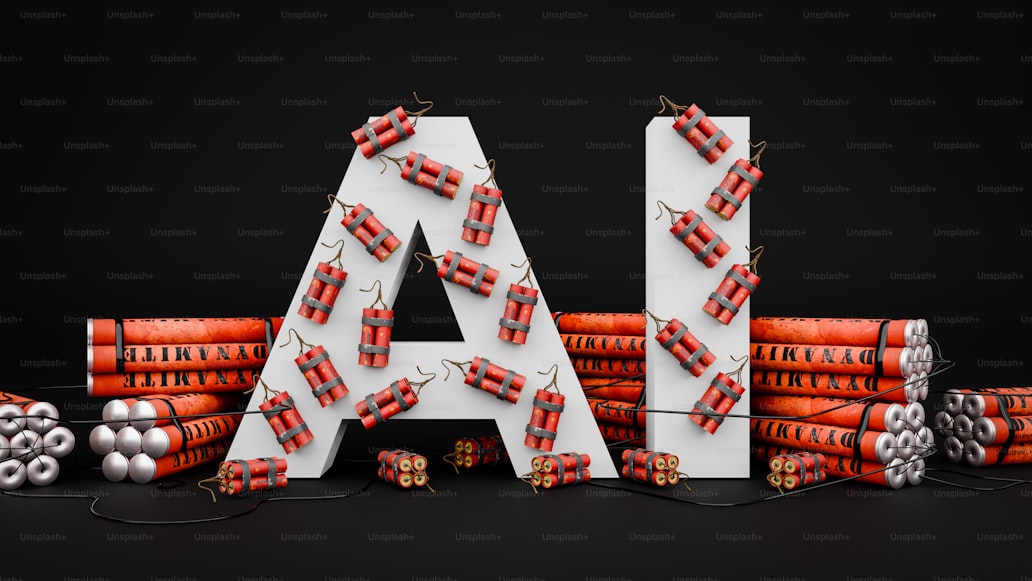
In a striking escalation of the rhetoric surrounding artificial intelligence, CIA Director John Ratcliffe has compared the capabilities of the most advanced AI models to nuclear weapons, defending the Trump administration's aggressive approach to controlling frontier AI technologies. The analogy, delivered during a speech at an Amazon Web Services conference in Washington on June 30, signals a fundamental shift in how the US government views the national security implications of advanced AI.
"In conversations with many of the president's other national security and economic security advisors, we're talking about the impact of these frontier AI models," Ratcliffe told the audience at the AWS summit. "It would be not misplaced to refer to their capabilities as akin to digital nuclear weapons." [citation:3][citation:5]
The comparison is not merely rhetorical. Ratcliffe's remarks came just days after the US government imposed unprecedented export controls on Anthropic's most powerful AI models, forcing the company to suspend global access to its cutting-edge technology. The administration's willingness to treat AI like a strategic weapon represents a dramatic departure from the relatively permissive approach that has characterized US AI policy until recently.
In This Article
What Ratcliffe Said: The Digital Nuclear Weapons Comparison
Ratcliffe's comparison of advanced AI to nuclear weapons was carefully calibrated. It was delivered at a major technology conference, in front of an audience of industry leaders, and it came with specific policy implications. The CIA director was not speaking hypothetically — he was defending a concrete set of actions that the administration had already taken.
Since taking office eighteen months ago, Ratcliffe said, tracking emerging technologies has been his highest priority, "right up there with China." [citation:5] The CIA has undergone a significant reorganization around cybersecurity, with the director describing a dual approach consisting of "a sword" and "a shield" to protect critical infrastructure. [citation:7]
Ratcliffe also accused America's adversaries of seeking "to steal and to manipulate America's advancements for their own ends and gains." [citation:5] This framing is important — it positions the administration's actions as defensive measures against hostile actors who would exploit American AI innovation for harmful purposes.
The nuclear weapons analogy is not new in national security circles, but Ratcliffe's public embrace of it marks a shift. The comparison between cutting-edge AI and nuclear weapons has become increasingly common in US national security circles, where several think tanks describe a genuine technological "arms race" pitting the United States against China and Russia. [citation:8]
The timing of Ratcliffe's remarks was significant. They came as the administration was implementing some of the most aggressive AI controls in history, including forcing Anthropic to cut off global access to its most powerful models. The CIA director's words provided the intellectual justification for these actions, framing them as necessary measures to prevent America's adversaries from acquiring capabilities that could threaten national security.
The Anthropic Case: A First of Its Kind
Ratcliffe's comments were a tacit defense of the Trump administration's recent actions against Anthropic, one of America's leading AI companies. On June 12, Washington forced the San Francisco-based firm to cut off access to its two most powerful models, Mythos 5 and Fable 5, by imposing export controls on them. [citation:3][citation:5]
The forced withdrawal of a frontier model by a government — a first in the industry — was a dramatic escalation of US AI policy. [citation:5] The controls applied not just to exports to foreign countries but to any access by foreign nationals, including employees working at Anthropic's US headquarters. The directive effectively treated access to the AI models as a "deemed export," a legal concept typically applied to technology transfers within US borders.
The restrictions were only partially lifted on June 26, when Mythos became accessible to a restricted circle of US partners. Fable 5, the consumer-facing version, remains offline. [citation:5][citation:10] Even as the administration has eased some controls, it has maintained a regime that treats access to frontier AI as a privilege granted only to trusted partners.
OpenAI, Anthropic's American rival, launched its GPT-5.6 model the same day with very limited access, agreeing for the first time to let the US government vet authorized partners on a client-by-client basis. [citation:5][citation:10] This suggests that the administration's approach is not targeting a single company but establishing a broader framework for controlling access to the most advanced AI systems.
President Donald Trump signed an executive order establishing a framework for the US government to evaluate advanced AI models for up to 30 days before their widespread release. [citation:9] Although participation is described as voluntary, this move marks a significant increase in the government's oversight role over the AI industry.
Why This Matters: The New AI Arms Race
The nuclear weapons analogy is more than just rhetoric. It reflects a fundamental shift in how the US government views the strategic importance of AI. Several factors make the comparison particularly apt.
First, like nuclear weapons, advanced AI models are dual-use technologies that can be employed for both constructive and destructive purposes. The same capabilities that make AI useful for scientific research and economic development can also be harnessed for cyberattacks, disinformation campaigns, and military applications.
Second, the development of advanced AI is characterized by a concentration of capabilities in a few hands, similar to the early days of nuclear weapons development. The United States, China, and a handful of other countries are racing to achieve leadership in AI, creating a dynamic that resembles the Cold War arms race.
Third, the proliferation of advanced AI capabilities raises existential concerns. Just as the spread of nuclear weapons creates the risk of catastrophic use, the proliferation of advanced AI could lead to destabilizing applications that threaten international security.
According to the Five Eyes intelligence alliance, comprising Australia, Canada, New Zealand, the United Kingdom, and the United States, advanced AI models could soon surpass current industry expectations. The alliance believes that AI will not only enhance defensive capabilities but could also completely transform the ability to conduct cyberattacks — and that this change will occur within months, not years. [citation:4]
Ratcliffe emphasized that monitoring emerging technologies has been his top priority "right up there with China." [citation:5] The CIA director warned that US rivals are seeking to "steal and manipulate" American technological achievements for their own purposes, positioning the administration's actions as a defensive measure against technological theft.
The Bottom Line
Ratcliffe's comparison of advanced AI to nuclear weapons signals that the US government views frontier AI models as strategic assets with national security implications comparable to the most destructive weapons ever created. This framing justifies an unprecedented level of government oversight and control over AI development and deployment.
Critics' Response: A De Facto Licensing Scheme?
Not everyone is convinced by the administration's arguments. Critics have called the government orders, which came with very little explanation, a de facto licensing scheme. [citation:5] The concern is that the administration is establishing a regime that gives the government effective veto power over the deployment of advanced AI, without clear legal authority or democratic accountability.
Isaac Harris, CEO of the Frontier Security Institute — a non-profit organization dedicated to AI and national security research — suggests that the US now appears to be beginning to set standards for its own developed AI models. However, he also noted: "There remains a big question mark over how the US government will handle equally dangerous AI models from China that face fewer barriers if they enter the US market." [citation:2]
This is a crucial point. If the US imposes tight controls on American AI companies while Chinese models flow freely into global markets, the administration's approach could actually disadvantage American firms without preventing the proliferation of dangerous capabilities.
Some industry observers have drawn uncomfortable parallels between the administration's actions and the rhetoric of previous US foreign policy. "In discussions with various other presidential advisers on national security and economic security, we regularly discuss the impact of cutting-edge AI models," Ratcliffe said at the conference, framing the administration's approach as part of a broader national security consensus. [citation:1]
But questions remain about the legal basis for the administration's actions. The Export Control Reform Act of 2018 was designed to regulate the export of tangible goods and source code, and its application to cloud-based AI services stretches the original intent of the law. Legal challenges to the administration's actions are likely, and courts may ultimately determine the boundaries of executive authority in this area.
Implications for the AI Industry
The administration's approach has significant implications for the AI industry. Companies developing frontier AI models will need to navigate an increasingly complex regulatory environment, with the government playing a more active role in determining who can access their technology.
For companies like Anthropic and OpenAI, the new regime means that they must coordinate with the government on the deployment of their most powerful models. This coordination may involve vetting partners, implementing access controls, and providing the government with advance notice of new capabilities.
At the AWS conference, Amazon announced a $1 billion credit program for US intelligence agencies and introduced a secure cloud service specifically for US defense contractors. [citation:2] This suggests that the government is also working to build partnerships with the private sector to ensure that American intelligence agencies have access to the best available technology.
Ratcliffe said he had met with Elon Musk, head of SpaceX, as well as executives from Amazon, Google and Dell. [citation:7] These meetings reflect a broader effort to align the interests of the technology industry with the national security objectives of the US government.
For smaller AI companies and startups, the implications are more mixed. While the administration's focus is primarily on the most powerful frontier models, the regulatory framework being established could eventually extend to less capable systems. Companies developing AI at any scale should be preparing for increased government oversight and regulation.
For international partners and allies, the administration's approach raises questions about access to American AI technology. The restrictions on Anthropic's models affected users in allied nations, creating diplomatic tensions and accelerating efforts in other countries to develop independent AI capabilities.
For businesses and developers using AI models, the message is clear: the regulatory environment is becoming more complex and uncertain. Companies that rely on AI systems should stay informed about regulatory developments and be prepared to adapt to changing requirements.
Looking Ahead: The Future of AI Regulation
Ratcliffe's nuclear weapons comparison is likely to shape the debate over AI regulation for years to come. By framing advanced AI as a national security issue comparable to nuclear weapons, the administration has established a framework that justifies aggressive government intervention in the AI industry.
Several trends will shape the future of AI regulation:
- Increased government oversight: The administration's actions against Anthropic are likely to be the first of many, with the government establishing a more active role in vetting and controlling access to advanced AI.
- International coordination: The US will likely seek to build international consensus around AI controls, potentially through treaties or multilateral agreements similar to the nuclear non-proliferation regime.
- Legal challenges: The administration's actions will face legal challenges from the technology industry, potentially leading to court decisions that establish the boundaries of executive authority in AI regulation.
- Geopolitical competition: The AI arms race between the US and China is likely to intensify, with both countries seeking to achieve strategic advantage through technological dominance.
- Ethical debates: The framing of AI as a national security issue will intensify debates about the ethics of AI development and the appropriate balance between security and innovation.
For now, the debate over AI regulation is likely to intensify. The administration's actions have established a new precedent that will be difficult to reverse, regardless of who holds political power in the future. The question is whether this approach will succeed in preventing the proliferation of dangerous AI capabilities, or whether it will simply create new challenges without effectively addressing the underlying risks.
As Ratcliffe himself noted, the US is facing "an adversary that is seeking to steal and to manipulate America's advancements for their own ends and gains." [citation:5] The administration's approach is designed to address this threat, but critics argue that it may also undermine American innovation and competitiveness in the long run.
What is clear is that the nuclear weapons comparison has changed the terms of the debate. AI is no longer just a technology — it is a strategic asset that will shape the future of international security. The challenge for policymakers, industry leaders, and society as a whole is to navigate this new reality in a way that protects security while preserving the benefits of AI innovation.
Stay Informed About AI Policy and Regulation
Subscribe to our weekly newsletter for the latest updates on AI policy, national security implications, and regulatory developments delivered directly to your inbox.
Subscribe Now